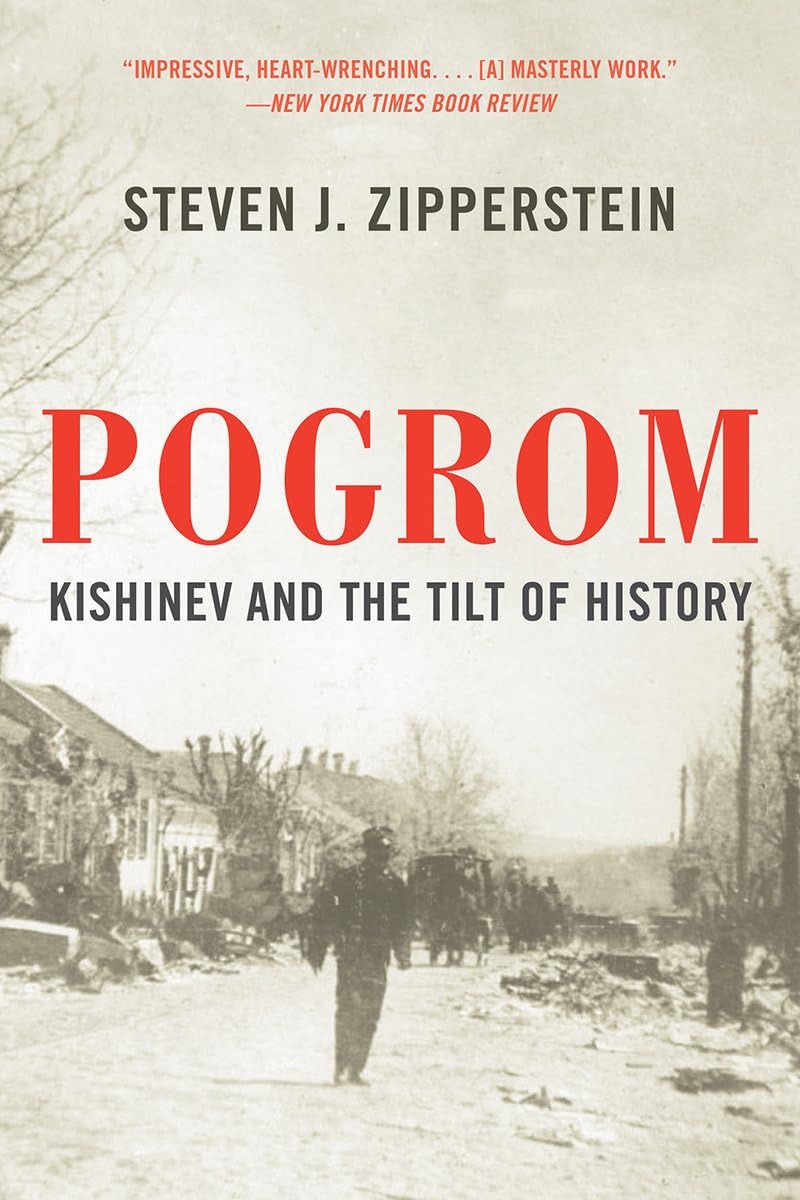
Separating historical fact from fiction, an acclaimed historian retells the story of Kishinev, a 1903 riot that transformed the course of twentieth-century Jewish history.
In three days of violence, 49 Jews were murdered and 600 raped or wounded, while more than 1,000 Jewish-owned houses and stores were ransacked and destroyed. Recounted in lurid detail by newspapers throughout the Western world, and covered sensationally by America’s Hearst press, the pre-Easter attacks seized the imagination of an international public, quickly becoming the prototype for what would become known as a “pogrom,” and providing the impetus for efforts as varied as The Protocols of the Elders of Zion and the NAACP. Using new evidence culled from Russia, Israel, and Europe, historian Steven Zipperstein’s wide-ranging book brings historical insight and clarity to a much-misunderstood event that would do so much to transform twentieth-century Jewish life and beyond.
Finalist for the National Jewish Book Award and named one of the Best Books of the Year by the Economist and the East Hampton Star.